Driving in Morocco is far easier than its reputation suggests. The motorways are modern, well surfaced and quiet. The complications are all in the details, and they are the kind of thing you only learn by getting them wrong.
Speed limits are enforced, and the fines are immediate
The limits are 120 km/h on motorways, 100 on dual carriageways, 60 on the approach to towns and 40 in built-up areas. Radar is common and the Gendarmerie collect fines on the spot in cash. A typical fine is 150 to 700 MAD. Always ask for the receipt.
Checkpoints are routine
You will be waved through most of the time. When you are stopped, hand over your licence and the rental agreement, both of which live in the glovebox. It is polite and it takes thirty seconds.
Roundabouts do not work the way you expect
In much of Morocco, traffic entering the roundabout has priority over traffic already on it, which is the opposite of European practice. In practice, the rule is: whoever is more committed goes. Approach slowly and make eye contact.
Fuel
Diesel is around 11 MAD per litre and petrol around 13. Stations are everywhere on the main routes but thin on the ground south of Ouarzazate — fill up before you head into the desert.
The one road to avoid after dark
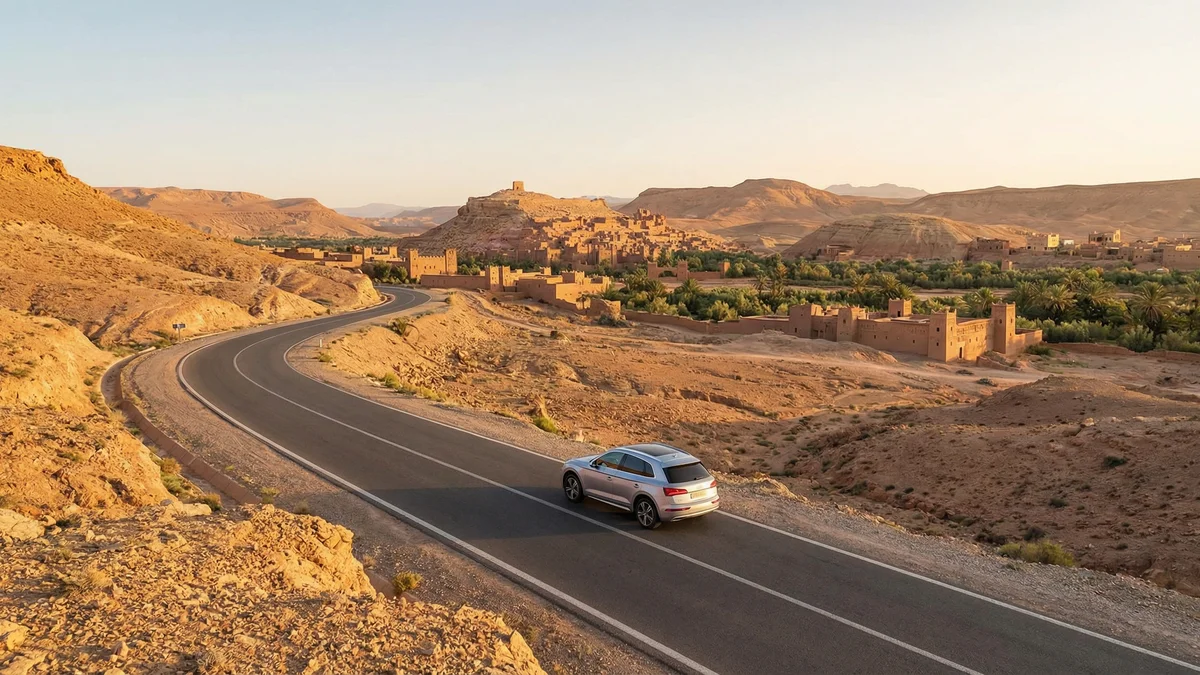
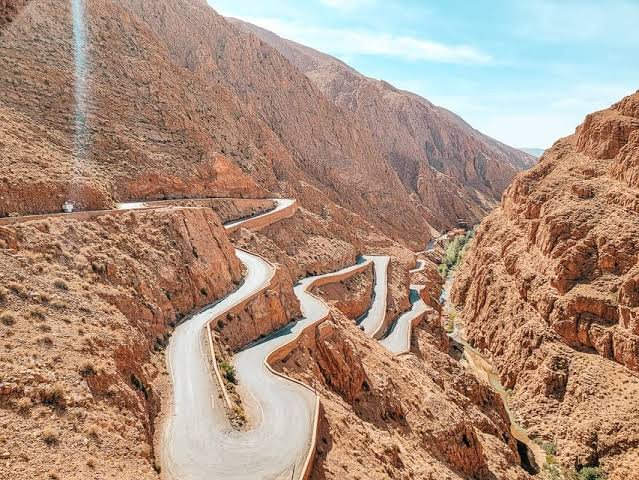
The Tizi n Tichka pass between Marrakesh and Ouarzazate is spectacular and completely safe in daylight. At night it is a different road: no lighting, no barriers in places, and lorries taking the centre line on the blind bends. Leave Marrakesh before noon.